Come Away With Me
Come Away With Me…To Your Gateway Waltz

By Aaron Wulff
Every so often a couple tells me they picked the easiest slow song they could find. Something soft. Something romantic. Something you can just dance to for a couple of minutes and call it done.
Congratulations! You picked a waltz.
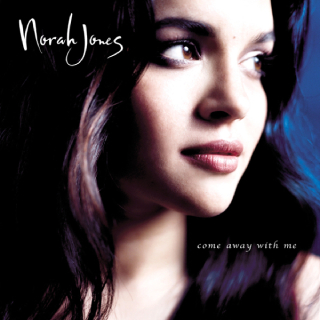
“Come Away With Me” is understated enough that it fools everybody, and it’s been fooling people since 2002. It’s the title track of Norah Jones’s debut album, one of the songs she wrote herself, and it sounds like a typical slow dance.
It’s a waltz wearing a slow dance’s clothes, and once you know that, everything about dancing to it gets easier.
The album’s story first, because the numbers are stupid. Blue Note is a jazz label, and in February of 2002 it released this record by a 22-year-old singer and pianist almost nobody outside New York jazz clubs had heard of. Jazz albums do respectable jazz business. This one sold nearly 30 million copies, went to number one in 20 countries, and won eight Grammys, Album of the Year included.
That’s not jazz math. That’s pop-star math in a cocktail dress.
Her own story is just as wild. She was born Geethali Norah Jones Shankar. Yes, that Shankar. Her father was Ravi Shankar, the sitar player who taught George Harrison. She was raised by her mother in Grapevine, Texas, and studied jazz piano at the University of North Texas before going back to New York to sing in clubs.
Somehow the sitar family tree produced a jazz pianist.
And she wrote the title track herself, which is my favorite part, because the lyric is a list of invitations: walk with me in fields, wake up with me to rain on a tin roof, all of it gorgeous. And then, tucked in there, she asks him to come away with her “on a bus.”
Ok, so the getaway vehicle is public transportation. It still works. That’s how good the record is.
So what did you actually sign up for?
This is a waltz, and there’s no negotiating with it. But that’s great news, because the waltz is my favorite dance. Nothing matches the exhilaration of gliding and flowing around the floor with someone. And no, you don’t need to glide and flow like a pro or move around the floor at all. But you can if you want.
In other words, don’t let the waltz intimidate you.
The tempo is doing you a favor. The record moves at about 81 beats per minute, which is the gentle end of slow waltz. A waltz box at this speed gives you time to finish a step before the next one is due, and time is the one thing beginners are short on.
Finding the beat is easy, with one trap. The piano, the bass, and the brushed drums lay the beat down steady from the first bar to the last. Norah’s voice is another story. She sings around the beat the way jazz singers do, a little ahead, a little behind, all of it beautiful, but that’s not where you’ll find the beat. Dance to the band, not the singer.
The layout is friendly. There’s an ample piano intro, 20 seconds to do as you will before she sings. Make an entrance. Take your frame, start when the verse starts. Or don’t. The song doesn’t demand it.
The guitar solo in the middle keeps the exact same groove, so nothing changes under your feet.
The song runs 3:18, but that’s deceptive. Now, my target for a first dance is two to two and a half minutes, and three is the wall, so if you go the whole length you’re pushing it.
I’ll give you an out. It’s really only 3:05 since you get a ritardando (slowing down) early. So now you’ve got a decision to make. Push through, edit, or fade. If you’re going to push, make sure you’ve got enough repertoire to justify it. Otherwise you’ve got a potential escape with a fade in the middle of the guitar solo before it ramps back up for the last verse.
So, the verdict. Learn a waltz and a this is one of the easiest slow picks on my whole list.
✓ PROS
- ✓Great beginner waltz
- ✓Excellent vibe
✕ CONS
- ✕It's still a waltz
🎧 ALTERNATE VERSIONS
Nah.
Get the free Wedding Dance Cheat Sheet
Keep Reading